
From implants to high-performance applications: titanium in turned-part manufacturing.
Titanium is expensive to procure and hard to machine – but for certain applications there is no alternative. What you need to know before using it.
Titanium Turned Parts: Material Science, Machining, Applications
Titanium and titanium alloys are the materials of choice for applications where weight, corrosion resistance or biocompatibility are decisive. But they are expensive and demanding to machine. This article looks at titanium from the perspective of CNC turned-part manufacturing.
Pure titanium (Grade 1 to 4) and the most important alloy Ti6Al4V (Grade 5) are the dominant materials in industrial processing. Grade 2 is the standard for pure titanium – good formability, very good corrosion resistance (including in seawater and chloride environments), good weldability. Grade 5 (TiAl6V4) has roughly twice the strength of Grade 2 and is the standard choice for highly loaded parts, permanent implants and aerospace applications.
The main application fields for titanium turned parts in our order book: medical technology (surgical instruments, screw components for orthopedic implants, dental technology), the chemical industry (parts for aggressive media), and occasionally aerospace sub-supply. In consumer goods (eyewear, jewelry), titanium is also widespread, but rarely Marquart's day-to-day business.
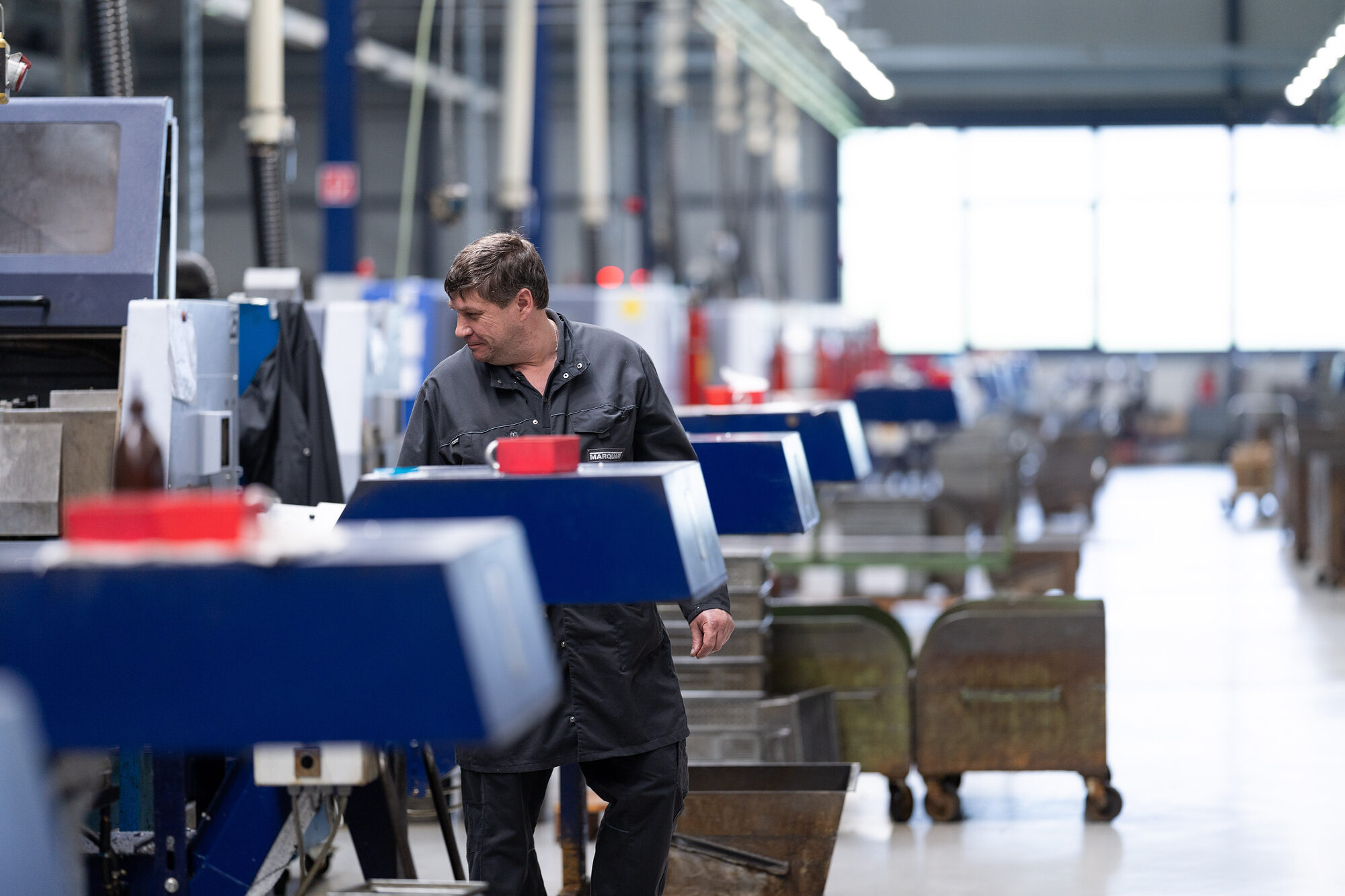
Machining titanium is demanding. Titanium conducts heat poorly – the heat builds up at the tool, causing tool wear. Titanium also tends to weld onto the tool, which can cause dimensional deviations and surface defects. On our Swiss-type automatic lathes we have established special machining strategies for titanium: lower cutting speeds, higher feed rates, a well-thought-out tooling concept, intensive cooling with high-pressure coolant.
In procurement, titanium is roughly a factor of 8–10 more expensive than standard stainless steel. Add longer machining times and higher tooling costs. Rule of thumb: a titanium turned part costs three to five times the unit price of a comparable stainless steel turned part. That is the truth – titanium is not a casual stand-in for stainless steel, but a deliberate engineering decision.
When is titanium worth it? When weight is decisive (titanium has about 60 percent of the density of stainless steel at comparable strength). When biocompatibility requirements apply (permanent implants). When extremely aggressive media are involved (chloride-bearing acids, seawater applications). In all other cases, a stainless steel is technically and economically superior in most instances.
A common question: can high-strength aluminium alloys replace titanium? For pure weight requirements, sometimes yes – AlZnMgCu1,5 (7075) has a specific strength that is competitive with titanium Grade 5 in many applications. For corrosion or biocompatibility requirements, no – there titanium remains without alternative.
Within pure titanium, Grades 1 to 4 are graded by increasing oxygen and iron content: Grade 1 is the softest and easily formable, Grade 2 the common material for corrosion-stressed parts, Grades 3 and 4 offer higher strength with decreasing ductility. For medical applications close to implants we use Grade 5 ELI (Extra Low Interstitials), which shows better fracture toughness thanks to reduced trace elements. Beta titanium alloys come into play when high strength combined with good cold formability is required. Which grade makes sense we clarify based on your requirements for strength, corrosion and approval.
When turned, titanium forms short, tough chips that can accumulate at the tool. More critical, however, are fine chips and grinding dust: finely divided titanium is flammable and burns at a very high temperature that water can barely extinguish. We therefore rely on amply dimensioned coolant supply, controlled chip flow and consistent cleaning of the work areas. Chips are collected separately and never mixed with other materials. We categorically avoid ignition sources near the fine-chip extraction. That keeps machining safely under control even in long series.
Titanium reacts sensitively to residual stresses, which arise during machining through localized heat input and forces. In thin-walled or slender parts this quickly leads to distortion as material is removed. We therefore work with a defined cut allocation, separate roughing and finishing cuts and remove stock in a low-stress manner. For critical geometries, stress-relief annealing between machining stages is advisable so the part retains its dimensional accuracy. We select clamping devices so the workpiece is not clamped in a distorted state and returns to dimension after release.
For implant-related applications, seamless traceability is decisive. We document batch by batch which material went into which part, and substantiate this with 3.1 or 3.2 material certificates to DIN EN 10204. Surface purity is equally important: iron inclusions or foreign contamination from previously machined steels must be avoided, as they impair corrosion resistance and biocompatibility. We therefore separate titanium machining organizationally and keep the associated documentation traceable via first article inspection to VDA 2 and CoC.
The key takeaways.
- 01Titanium Grade 2 = the pure standard, very good corrosion resistance, medium strength.
- 02Titanium Grade 5 (TiAl6V4) = twice the strength, standard for implants and high performance.
- 03Machining is demanding: low cutting speed, high tooling requirements, intensive cooling.
- 04Price factor 3–5 versus stainless steel turned parts – use only with a clear technical justification.
- 05For pure weight requirements, high-strength aluminium can often be cheaper.
FAQ on this topic.
Do you machine titanium in small series too?+
Which material certificates are customary for titanium parts?+
How do titanium parts affect delivery time?+
Do you achieve tight tolerances in titanium too?+
Do you also offer titanium special nuts?+
Can you also surface-treat titanium parts?+
Your drawing on our desk.
We check feasibility, suggest optimizations and get back to you within 48 hours with a first assessment.